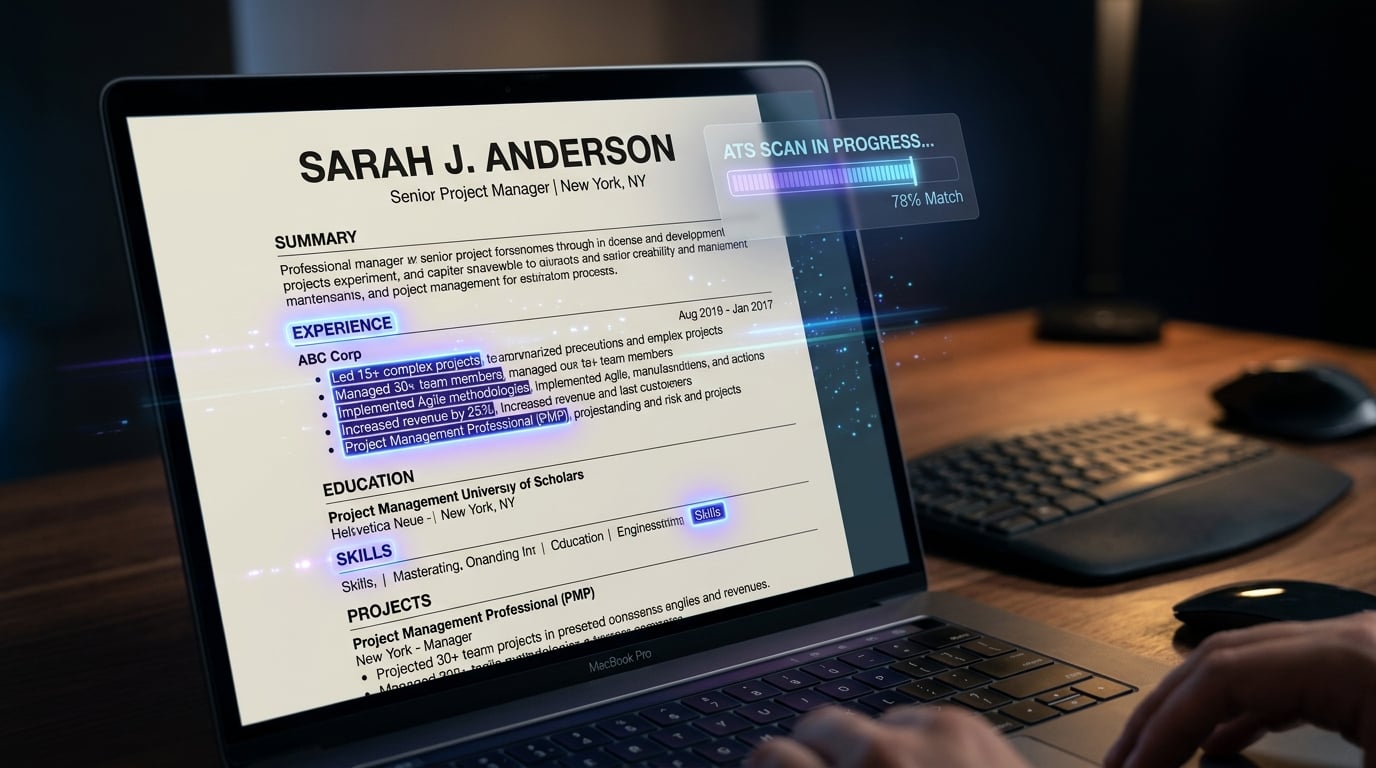
The Silent Gatekeeper Between You and Your Dream Job
If you've ever spent hours perfecting a resume only to hear nothing back, you're not alone. According to research from Jobscan and Harvard Business School, up to 75% of resumes are automatically rejected by Applicant Tracking Systems (ATS) before a human recruiter ever looks at them.
That's right — three out of every four applications never get read by a person.
What Is an ATS and Why Does It Matter?
An Applicant Tracking System is software used by over 98% of Fortune 500 companies and roughly 75% of mid-size employers (according to Jobscan's 2024 report). These systems parse, rank, and filter resumes based on keyword matching, formatting compatibility, and structured data extraction.
Popular ATS platforms include Workday, Greenhouse, Lever, iCIMS, and Taleo. Each has different parsing algorithms, which means a resume that works for one might fail in another.
The Numbers That Should Wake You Up
The Top 5 Reasons ATS Rejects Your Resume
1. Incorrect File Format
Many ATS systems struggle with complex formatting. Headers, footers, text boxes, tables, and multi-column layouts often get scrambled during parsing. A beautifully designed PDF might look like gibberish to the software.
2. Missing Keywords
ATS ranks candidates by how closely their resume matches the job description. If the posting says "project management" and your resume says "led team initiatives," the software may not make the connection.
3. Non-Standard Section Headings
Creative headings like "My Journey" instead of "Work Experience" confuse ATS parsers. Stick to conventional headers: Education, Experience, Skills, Certifications.
4. Graphics and Images
Logos, icons, headshots, and infographic-style resumes are invisible to most ATS. The system can't read pixels — it reads text.
5. Lack of Quantified Achievements
Modern ATS systems increasingly use AI to evaluate the substance of your experience. Generic descriptions like "responsible for sales" score far lower than "increased quarterly revenue by 34% over 12 months."
How to Get Past the ATS
1. Mirror the job description: Naturally incorporate keywords from the posting
2. Use clean formatting: Single column, standard fonts, no graphics
3. Save as .docx or plain PDF: Avoid image-heavy PDFs
4. Include a skills section: List both hard and soft skills that match the role
5. Use an ATS checker: Tools like Hirelytic analyze your resume against real ATS algorithms and show exactly what to fix
The Bottom Line
The job market isn't just competitive — it's automated. Understanding how ATS works gives you a massive advantage. Stop guessing why you're not getting callbacks and start optimizing your resume for the systems that actually decide who gets interviewed.
Your resume might be perfect for a human reader — but if it never reaches one, it doesn't matter.