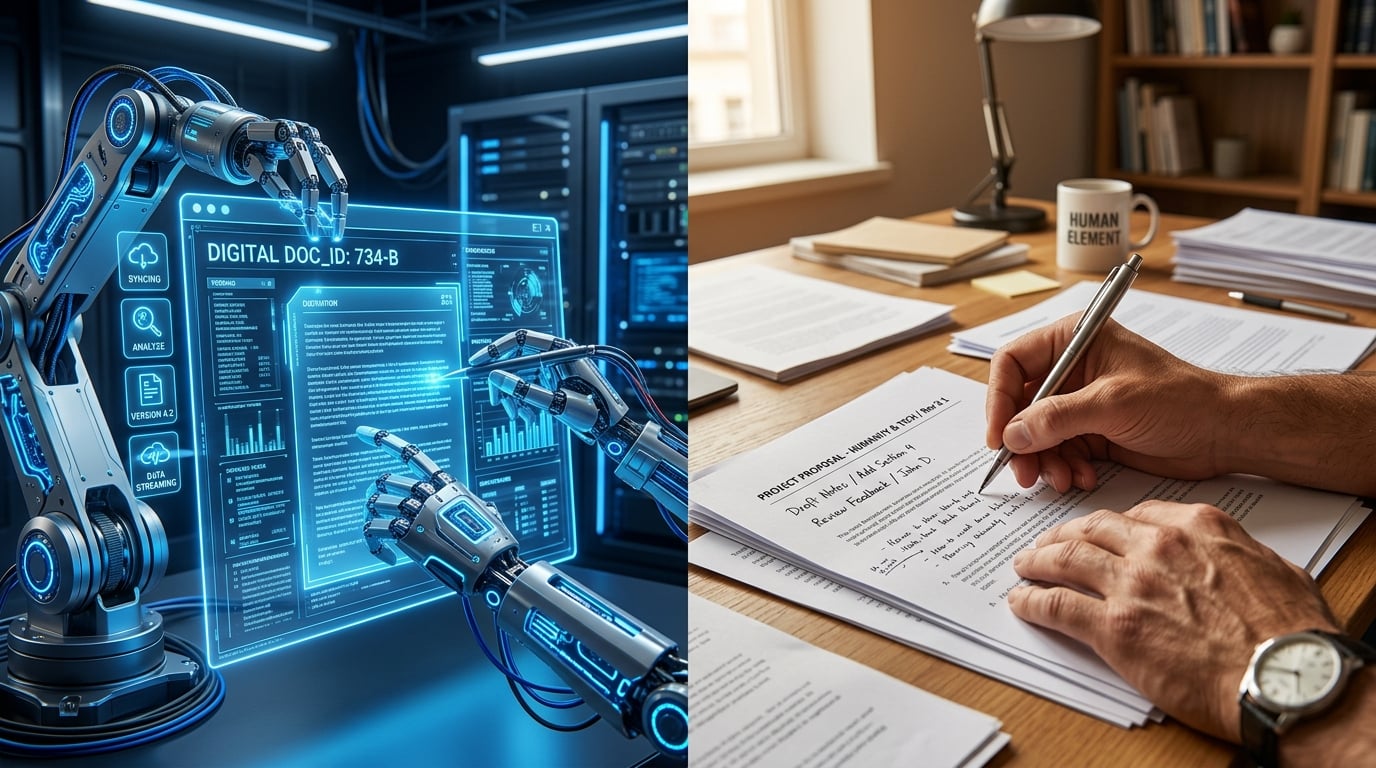
The Great Resume Writing Debate
The professional resume writing industry is worth an estimated $2.1 billion globally (IBISWorld, 2025). But AI resume tools have exploded in popularity, with usage growing 340% since 2023 according to ResumeGenius's market analysis. So which approach actually gets you more interviews?
The Case for Human Resume Writers
Strengths
Narrative craft: The best writers tell your career story in a compelling, human wayIndustry insight: Experienced writers understand what specific industries valueNuance: They can handle complex career changes, gaps, and sensitive situationsPersonal touch: Phone consultations and back-and-forth collaborationLimitations
Cost: $200–$400 for entry-level, $500–$1,000+ for executive. The Resume Writers' Association reports average fees of $547 in 2025Speed: 3–7 day turnaround is standard, sometimes 2+ weeksATS knowledge varies wildly: Many "professional" writers still use graphics-heavy templates that fail ATS parsingNo data-driven optimization: Most writers rely on intuition rather than algorithmic testingQuality inconsistency: The industry is unregulated — certifications exist but aren't requiredThe Case for AI Resume Tools
Strengths
Speed: Optimization in seconds, not daysCost: Free to $30/month — a fraction of human writersATS precision: Built specifically to beat the algorithmsData-driven: Analyze millions of successful resumes to identify patternsUnlimited iterations: Optimize for every single job postingConsistency: Same quality every timeLimitations
Creativity ceiling: AI works best at optimizing existing content, not creating from scratchComplex narratives: Career changes and unusual backgrounds may need human interpretationPersonal branding: High-level executives may benefit from a writer's strategic positioningWhat the Research Says
A fascinating 2025 experiment by ResumeHub compared outcomes:
Human-written resumes: 12% interview rateAI-optimized resumes: 17% interview rate Human-written + AI-optimized: 23% interview rateThe takeaway? AI optimization alone outperformed professional writing alone. But the combination was the clear winner.
Similar findings from MIT's 2025 labor economics study found that AI-assisted job applications resulted in callbacks that were roughly 3x higher than the control group.
The Honest Recommendation
Use AI tools if you:
Apply to multiple jobs regularly (AI lets you customize for each)Are early-to-mid careerHave a straightforward career pathWant quick results on a budgetNeed to optimize for ATS specificallyConsider a human writer if you:
Are a C-suite executive with a complex storyAre making a dramatic career changeHave significant career gaps that need strategic framingHave budget for $500+ investmentBest strategy for everyone:
Start with AI optimization to get your ATS score and keyword match right. If you then want human polish on top, you'll give the writer a stronger foundation to work with — and save money on fewer revision rounds.
The Market Is Speaking
The data is clear: candidates who use AI tools in their job search are outperforming those who don't. The question isn't whether to use AI — it's whether to use AI alone or combine it with human expertise.
Either way, submitting an unoptimized resume in 2026 is like bringing a handwritten letter to a typing competition.
Check Your Resume Score — Free
See how your resume performs against ATS systems used by top employers.
Analyze My Resume